A Borrowing Shelf Works Best When Its Labels Answer Real Questions
Borrowing shelf labels clarify an item’s condition, suitable use, and return routine so neighbors can choose confidently and put shared belongings back properly.
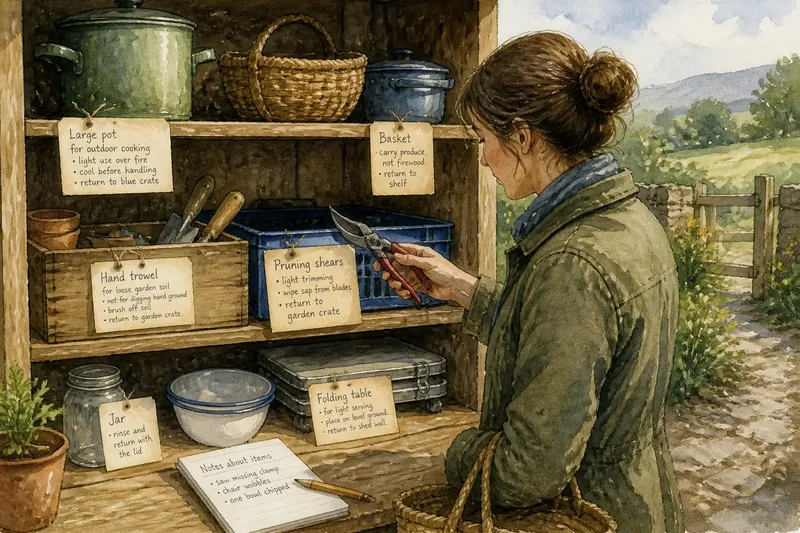
A neighbor reaches for the hand pruner on a borrowing shelf, then pauses: the blades look dull, and the tag says only “garden.” Borrowing shelf labels can answer the practical questions that help neighbors choose an item and return it with less guesswork.
A label can be made from reused card, a clean piece of packaging, or an envelope. Its value comes from clear information placed where a borrower can read it before taking the item.
What should a condition label say?
Describe what someone can see or feel rather than giving the item a broad grade. “Used; handle is rough” tells a borrower more than “good.” “Missing one measuring spoon” is clearer than “incomplete.”
Keep the wording neutral. “Sticky latch; opens with a firm pull” records an observable detail without blaming anyone. If an item needs repair or inspection before use, mark that plainly and set it apart from ready-to-borrow things. A label is not a substitute for checking whether an item is suitable to use.
Make it easy to report a change. A pencil and small pad beside the shelf can collect notes about new damage or missing pieces. The person responsible for the shelf can then update the label or remove the item until its status is clear.
How can a label explain suitable use?
Name the task an item suits, especially when its name could mean several things. “Hand trowel for loose garden soil” gives more guidance than “trowel.” “Large pot for outdoor cooking” distinguishes it from cookware meant for indoor use.
State important limits in plain language. A folding table might say “for light serving; place on level ground.” A basket might say “carry produce, not firewood.” This helps someone decide whether the item fits the job before carrying it home.
If the item has a maker’s instructions or label, keep them with it when practical. Follow those directions and any applicable local rules. A handwritten tag can point to instructions, but it should not replace them.
Which return details prevent confusion?
Describe an action a borrower can see and do. “Brush off soil before returning” is more specific than “return clean.” For a jar, “rinse and return with the lid” names both the task and the part to bring back. For a hand saw, “wipe dry and return to this shelf” may be enough.
Name the destination if the shelf has sections: “Return to the blue crate” is clearer than “put back.” If an item has parts, list them, such as “return with the clamp and two pads.” A small drawing or a short parts list can help when the tag is crowded.
Say you borrow pruning shears with the tag “light trimming; wipe sap from blades; return to the garden crate.” You see that the shears are intended for light trimming, decide they fit your task, wipe the blades afterward, and put them in the named crate. The tag makes the borrowing and return routine clear without relying on someone’s memory.
How can you make a label from supplies on hand?
Use what is already available: reused card, a pencil, masking tape, or clean packaging. Attach the tag without covering a maker’s label or leaving adhesive on a delicate surface. For an item likely to get wet or muddy, a reused clear sleeve may protect the card if one is available.
Write in large, readable letters and use a few short lines. A useful order is the item name, condition, suitable use, and return instruction. Leave room for a later note or use a separate slip so the original wording can be updated neatly.
What is not worth the effort? Matching every tag to a color system, laminating scraps, or decorating labels before anyone has tried them. Those tasks can take time without answering a borrower’s immediate questions.
What label details should you check before borrowing?
What belongs on a borrowing shelf label?
Look for the item’s name, a specific condition note, its intended use or limit, and a clear return instruction. If a part is missing or the return location could be unclear, the label should say so.
What should you do if an item’s condition has changed?
Write a brief note on a separate pad or slip rather than crossing out the tag. The shelf’s caretaker can update the description and decide whether the item should remain available.
How should a label describe missing parts?
Check that it names what is absent and what remains, such as “one lid; no handle.” If the missing part affects the item’s intended use, the label should make that clear so the caretaker can decide whether to set it aside.
When should a shelf label be reviewed?
Review it when the item returns, someone reports a change, or the wording no longer matches the item. A quick check during ordinary tidying is more practical than a review routine that people are unlikely to keep up.
When should you change or remove a label?
Update the note when the item’s condition, contents, or suitable use changes. Remove old directions if the shelf has moved, and take down a label when its item is no longer available. Outdated wording can mislead as easily as missing wording.
For borrowing shelf labels, the useful test is simple: can the next borrower tell what the item is like, what it suits, and how to return it? Plain, current instructions can make a shared shelf easier to use without new supplies or a complicated set of rules.