A Rainy Afternoon Built Around One Shared Table
A rainy afternoon around one shared table can make a welcoming, low-cost gathering for a simple meal, quiet pastime, and unhurried conversation.
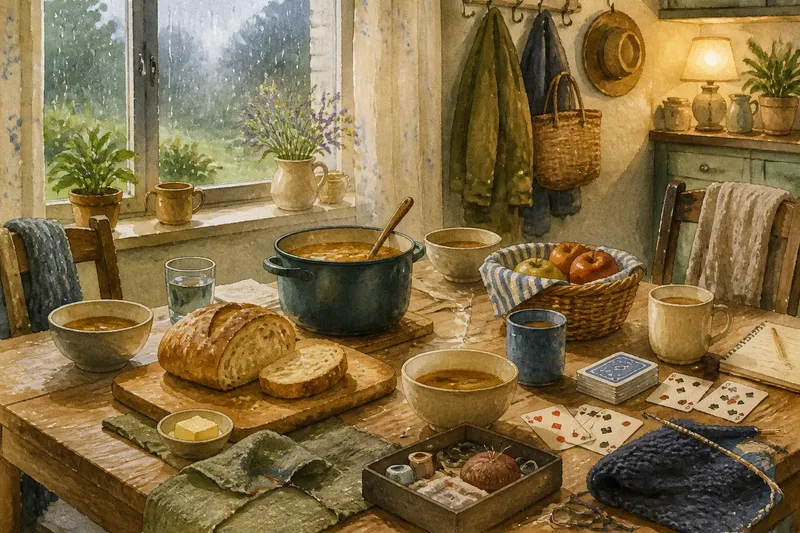
Rain ticks against the window while a pot of soup warms on the stove. At the kitchen table, someone sets out bread, a deck of cards, and a mug for a late arrival. A rainy afternoon around one shared table needs a few clear choices, not a packed schedule or a special venue.
Choose a table that can change jobs
Start with the table itself, not an activity list. A kitchen or community-room table works well if people can reach it from several sides and still have room to put down a bowl. Clear away anything that does not need to stay, but leave useful things—such as a breadboard or a small lamp—in place if they make the room feel lived in.
Consider who is coming and what the table must accommodate. A household table may suit a small group; a borrowed folding table can extend the surface for a larger one. If the table is narrow, serve food in the kitchen or on a side counter, then bring out only a few shared dishes. That leaves the main surface open for elbows and later activities.
Use a washable cloth, placemats, or a bare surface that can be wiped down. Skip tall arrangements and fragile decorations: they interrupt sightlines and take up room. A jar with a few garden stems is enough if you want a simple focal point.
Invite people without making the afternoon feel formal
A useful invitation says what to expect and what guests may bring. Mention that the gathering is casual, that a meal will be shared, and that there is no need to prepare entertainment. People can bring bread, fruit, a favorite card game, or nothing at all. Naming the plan helps guests decide whether it suits them without making the invitation sound like an assignment.
For a shared meal, ask for one kind of contribution rather than a full dish from everyone. One person might bring bread and another might bring apples, while the host provides soup or another simple main dish. If guests have food needs, ask privately and adapt the menu with ordinary care. Keep ingredient packaging nearby so people can check what is in a dish.
Be clear if seating is limited or if the room may not meet a particular access need. Moving a chair, clearing a path, or setting a place near the door can make joining easier. Ask what would help rather than assuming.
Make the meal easy to serve and easy to leave
Choose food that can wait while people arrive. Soup, stew, baked potatoes, or a pot of beans can be served without requiring everyone to sit down at once. Add bread, butter, cut vegetables, or fruit, depending on what is already available. A warm drink can come later, after bowls are cleared.
Set out serving spoons, bowls, and napkins before guests arrive. Place hot dishes where people can reach them without carrying full plates through the room. Keep a clear spot for used bowls and a dish towel nearby. The aim is not restaurant-style service; it is to make the meal comfortable and manageable.
Say you invited a neighbor who may arrive after the soup is served. Set aside a portion and keep it covered, following safe food-handling guidance; leave a bowl and spoon on the counter. The neighbor can eat without asking everyone to pause or making the host restart the serving routine.
Not every rainy gathering needs homemade food. A loaf from a local bakery, a jar of pickles, or leftovers from an earlier meal can complete the table. Elaborate recipes and matching place settings are not worth the effort if they leave the host too busy to sit down.
Leave one quiet pastime within reach
After eating, offer one low-pressure activity that can be started or set aside easily. A deck of cards, a simple jigsaw puzzle, knitting, mending, or a shared sketch pad can sit at one end of the table. Choose something that does not require everyone to join, and avoid a game whose rules need a long explanation.
Keep materials contained in a basket or shallow box. For mending, that might mean needles, thread, and fabric already in progress; for drawing, pencils and scrap paper are enough. If children are joining, include something they can handle independently, such as paper and washable crayons. Put small or sharp items away when they are no longer in use.
Let the activity remain an option, not the center of attention. Someone may prefer to watch the rain or finish a cup of tea. A quiet pastime gives hands something to do without taking conversation hostage.
Let conversation find its own pace
A shared table gives people a natural reason to linger, but a host does not have to keep the talk moving. Begin with an easy prompt tied to the day: what the rain changed, what is growing well nearby, or what someone likes to cook when the weather turns damp. Then leave room for the conversation to shift or pause.
For a mixed group, avoid assuming everyone knows the same local stories or shares the same interests. Ask open questions and offer context when a place or person comes up. If someone is quieter, do not press them to perform. They may be content to listen while doing a small task.
A recipe someone wants to pass along, a plant cutting to identify, or a local event flyer can offer practical subjects for conversation. These are invitations, not an agenda. Let guests pick them up if they are interested.
What should you prepare before guests arrive?
How much food is enough for a casual gathering?
Plan one filling shared dish, a simple accompaniment, and water or another drink. Tell guests whether food is provided or contributions are welcome, so nobody has to guess.
What can guests do if they do not want to play a game?
Leave a quiet alternative within reach, such as a book, mending, or a window seat. Make it clear that sitting and talking—or simply listening—is welcome too.
How can the table stay useful after the meal?
Move bowls and serving dishes to a side surface, then wipe spills before bringing out paper or craft materials. Keep a clear place for cups so an activity does not compete with everyone’s drinks.
What if the room feels crowded?
Keep activity materials compact and use the chairs already around the table rather than adding furniture that blocks movement. If people cannot sit comfortably, shorten the gathering or move some conversation to a nearby room.
End the afternoon without rushing anyone
As the light changes, offer tea or another warm drink and mention a natural stopping point, such as before evening chores or the next meal. That gives guests a gentle cue without making the gathering feel timed. People can help carry cups to the sink if they offer, but the host need not turn cleanup into a group task.
Before everyone leaves, gather borrowed items and return food containers to their owners. Put reusable materials back in their basket and leave the table ready for its next ordinary use. A rainy afternoon around one shared table works best when the meal, pastime, and conversation each have room—and nobody has to keep the whole room entertained.